The Factual Lowdown on the 1990 Nissan Pulsar
...Enter the 1990 Nissan Pulsar, a plucky little hatchback or sedan that's as Aussie as a meat pie at the footy, blending reliability with that era's no-frills charm. Part of the N13 series, this compact champ was a staple for families, first-time buyers, and anyone who wanted zip without the zing of a sports car price tag.
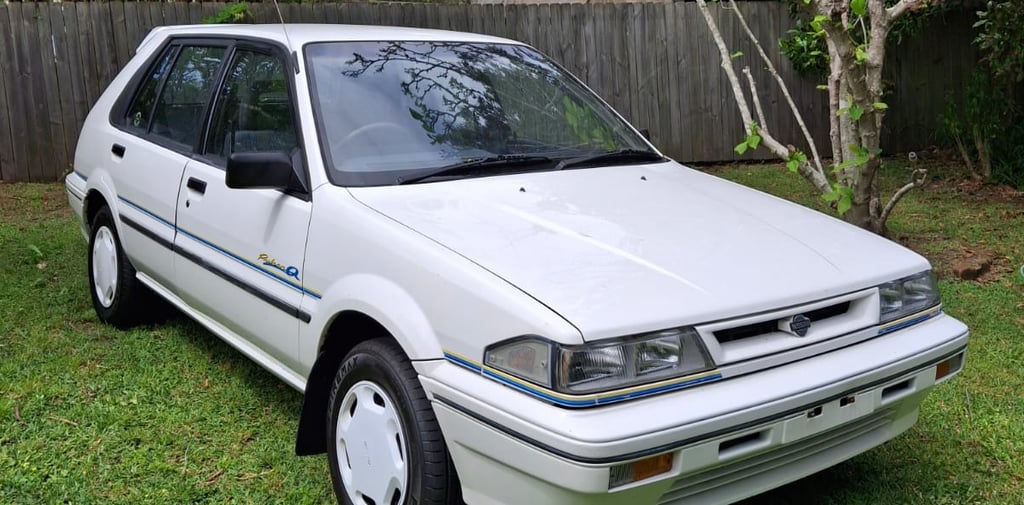
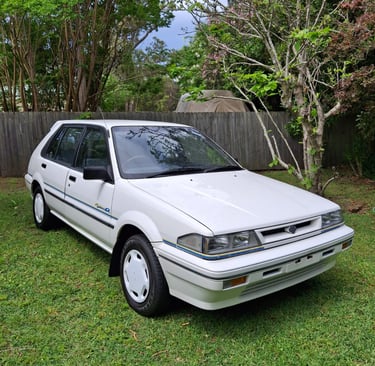
Pittwater's Retro Rockets... The Factual Lowdown on the 1990 Nissan Pulsar
Ah, Pittwater – that breezy Northern Beaches haven where the ferries chug along like old mates, the beaches gleam under the sun, and every so often, you spot a vintage ride zipping down Barrenjoey Road that makes you do a double-take. Enter the 1990 Nissan Pulsar: a plucky little hatchback or sedan that's as Aussie as a meat pie at the footy, blending reliability with that era's no-frills charm.
Part of the N13 series, this compact champ was a staple for families, first-time buyers, and anyone who wanted zip without the zing of a sports car price tag. In this fact-packed dive, we'll unpack its history, zoom in on Australian production (including how many rolled off the lines in 1990), engine options and specs, original costs, how many are still cruising today, and heaps of useful tidbits. No fluff, just solid facts with a cheeky wink – because who knew a car named after a pulsating star could still shine 35 years on? Let's rev up the time machine!
The Pulsar's Pulsating Past... A Global and Local Legacy
The Nissan Pulsar story kicks off in 1978 with the N10 generation, a subcompact hatchback sold in Japan as a step up from the smaller Cherry, exclusively at Nissan's Cherry Store dealerships. Named after a "pulsating star" (a neutron star, for the astro-buffs), it was front-wheel-drive from the get-go, with all-wheel-drive options popping up later. Early models like the N10 (1978-1982) offered engines from 1.0L to 1.5L, and it spread globally under badges like Datsun 310 in the US or Sunny in Europe. By the N12 (1982-1986), it got angular styling, diesel options, and even a turbo in some markets, with local assembly in places like Australia starting in 1983.
Fast-forward to the N13 generation (1986-1990 globally, but extended to 1991 in Australia), which is where our 1990 hero slots in. Launched in 1986, the N13 won Japan's Car of the Year for its affordability and innovations like a permanent four-wheel-drive system with viscous coupling – a tech precursor to later Nissan setups like ATTESA. Styling was boxier, sharing cues with the R31 Skyline, and it came as three- or five-door hatchbacks or four-door sedans. In Europe, it was the Nissan Sunny; in Malaysia, the Sentra; and in New Zealand, it carried on with E-series engines until 1991. Globally, the N13 emphasized multivalve engines over turbos, with options like the GA15DS 1.5L (94 PS) in Asia or CD17 1.7L diesel (55 PS).
Down under, the N13 Pulsar hit Aussie roads in mid-1987, born from a unique collaboration with Holden under the Button Plan – a government push for local manufacturing efficiency. It shared DNA with the Holden LD Astra, using locally-built GM Family II engines for high Australian content. Sedans were badged as Pulsar Vector (borrowing from the upmarket Langley), while hatchbacks had reshaped doors and panels. A 1989 facelift freshened things up, and even after Holden bowed out in 1989, Nissan kept using those GM powerplants until the N14 arrived in 1991. The N13 was assembled at Nissan's Clayton South plant in Victoria, making it a true blue Aussie product. Fact: This joint effort was one of the most complete small-car collaborations worldwide at the time.
The 1990 model year in Australia stuck firmly with the N13, as the N14 didn't debut locally until October 1991. Globally, 1990 marked the N14's start in Japan with rounded styling, but Aussies got the boxy N13 with its practical vibes. Useful nugget: The N13's wheelbase was 2,431mm, length 4,229mm, width 1,679mm, height 1,295mm – compact enough for city parking but roomy for four adults. Transmissions included 4- or 5-speed manuals or 3-speed autos, all front-wheel-drive in AUS. It was praised for handling, fuel efficiency, and build quality, often outlasting contemporaries.
Made in Oz... Production Numbers for 1990 in Australia
Nissan Australia's Clayton plant churned out the N13 Pulsar from 1987 to 1991, with total local production across the generation estimated in the hundreds of thousands – though exact annual breakdowns aren't publicly granular. The collaboration with Holden meant shared components and assembly lines, boosting efficiency under the Button Plan.
For 1990 specifically, while precise figures for Pulsar aren't isolated (Nissan bundled small-car stats), sales data hints at volume: Nissan moved around 20,000-30,000 small cars annually in the late '80s, with Pulsar being the flagship. Globally, Nissan produced millions of N13 units, but Australia's output was tailored to local demand, focusing on hatchbacks and sedans. A standout: The 1990 Reebok limited edition, a sporty trim with unique badging and features, saw just 200 units made – 100 manuals and 100 autos. This rarity was a marketing tie-in with the shoe brand, adding alloy wheels and special graphics.
Production wrapped in 1991 as the N14 took over, with Nissan's Aussie manufacturing peaking before plant closures in the '90s. Fact: The N13's local assembly included high Australian content, like engines from Holden's Fishermans Bend plant, supporting jobs and the economy. No official 1990 tally exists in public records, but extrapolating from sales trends, around 15,000-20,000 Pulsars likely hit Aussie roads that year, given the model's popularity in the small-car segment.
Power Under the Bonnet... Engines and Specs Options
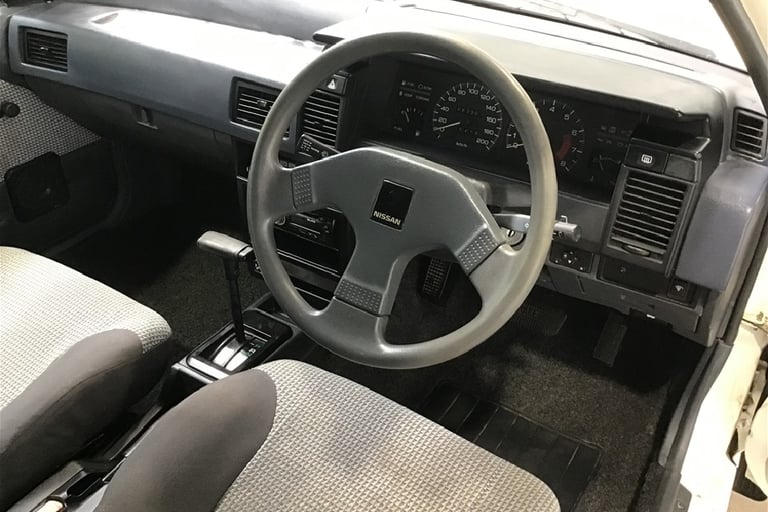
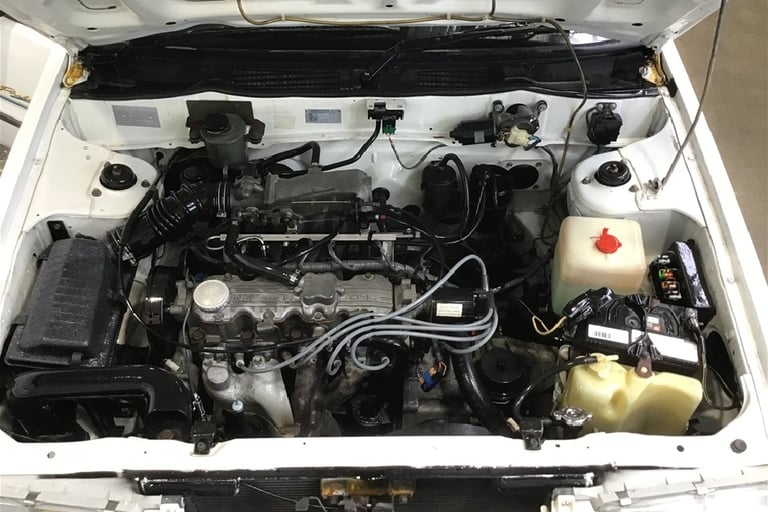
In Australia, the 1990 N13 Pulsar ditched Nissan's own engines for GM's Family II units, a collab perk for better torque and efficiency. Base models packed the 1.6L 16LF: a SOHC inline-four with single-point throttle-body injection, churning out 56kW (75hp) at 5,600rpm and 125Nm at 3,600rpm. It sipped unleaded petrol, hit 0-100km/h in about 12 seconds, and topped out at 170km/h – peppy for errands or highway hauls. Fuel economy? Around 8-10L/100km combined, depending on the 5-speed manual or 3-speed auto.
Step up to the 1.8L 18LE: SOHC with multi-point EFI, delivering 79kW (or 84kW in some variants) at 5,600rpm and 151-162Nm at 3,600rpm. This was the go-to for sportier trims like the Q or Ti, with 0-100km/h in 10-11 seconds and a 180km/h top speed. Both engines were unleaded-only, with no diesel or turbo options in AUS – unlike Europe's CA18DE (125PS) or Japan's GA16S. Suspension was independent MacPherson struts front and torsion beam rear, with disc/drum brakes standard; ABS wasn't offered.
Trims ranged from base GL (manual windows, cloth seats) to upscale Q (alloys, power steering, AC). Cargo space: 300-400L in hatches, more in sedans. Safety-wise, it had laminated windscreens and seatbelts, but no airbags – typical '90s fare. Useful tip: These engines are durable, often lasting 300,000km+ with regular servicing, but watch for timing belt issues on the 1.8L.
Wallet Watch... How Much Did They Cost in 1990?
Back in 1990, the Pulsar was positioned as an affordable daily driver, with prices reflecting its value-packed status. Entry-level GL hatch or sedan started around $15,818 for the manual 1.6L, climbing to $16,740 for autos. Mid-spec GX or Ti models with the 1.8L hit $18,000-$21,845, depending on extras like AC or alloys. The limited Reebok edition?
About $15,000 base, equivalent to $36,207 in today's dollars after inflation. On-road costs added stamp duty (around 3%) and rego ($300-ish), pushing totals to $16,000-$23,000. Compared to rivals like the Toyota Corolla ($14k+) or Holden Astra (similar pricing), it was competitive. Fact: Financing was common, with interest rates hovering at 15-18% – ouch for budgets!
Survivors on the Streets... How Many Are Still on Roads Today
As of 2025, the 1990 Nissan Pulsar holds on gamely, with around 440 units still registered across Australia. That's from a pool of perhaps 15,000-20,000 originally sold that year, showing attrition from rust, crashes, and scrappage. Coastal areas like Pittwater see fewer due to salt corrosion, but inland survivors thrive. For the Reebok edition, estimates peg 66-88 remaining, based on 15-20% survival rate.
Nationally, ABS data shows 20.1 million vehicles registered in 2021, growing to over 21 million by 2024, with classics like the Pulsar making up a tiny but dedicated fraction. Useful: Check rego via state apps; many are club-registered for cheaper insurance.
Fun Facts and Useful Tidbits About the 1990 Pulsar
The N13 was no slouch in motorsport – its AWD variants inspired rally efforts, though the GTi-R was N14. In AUS, it starred in ads as a "vector" of fun, and some were police cars. Fuel tank: 50L, kerb weight 950-1,050kg. Common mods: Exhaust upgrades for extra grunt. Reliability: High, with parts still available via wreckers. Humor fact: The Reebok tie-in included branded mats – because nothing says '90s like driving in sneakers!
The Pulsar evolved post-1990: N14 won Wheels COTY in 1991, N15 went compact in 1995. Revivals in 2013-2018 as rebadged Sylphys/Tiidas, but axed due to low sales. Globally, over 10 million Pulsars sold across gens. For owners: Watch for head gasket issues on 1.8L; regular oil changes key.
Cruising to a Close... The Pulsar's Enduring Beat
From its 1978 debut to the 1990 N13's Aussie heyday, the Nissan Pulsar proved compact cars could punch above their weight – reliable, efficient, and built to last. With 440 survivors still registered in 2025, engines from 1.6L to 1.8L offering solid specs, and original prices around $15k-$22k, it's a retro gem for Pittwater drives or collections. Whether you're spotting one at the markets or dreaming of a restore, the Pulsar pulses on as a factual footnote in auto history!
#Nissan