The Pittwater Property Market
...Stay informed about properties for sale and rental opportunities in this stunning coastal region.
Buddy
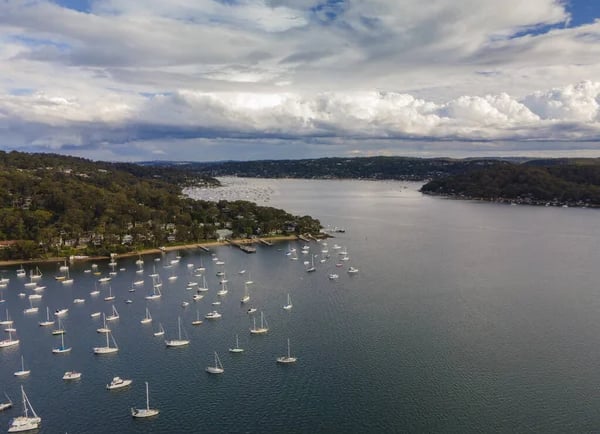
A Decade of Growth, Golden Opportunities, and Why It's Australia's Coastal Crown
Hey folks, welcome back to the Pittwater Properties blog – your window into the best slice of Sydney living. If you're like me, a local who's called this stunning estuary home for over 20 years, there's nothing quite like watching the sun rise over the water while sipping coffee on the deck, pondering the next chapter in our evolving market. I'm Buddy, and I've seen Pittwater transform from a sleepy weekend escape to one of Australia's most coveted addresses – not through hype, but through steady, storybook growth that reflects the area's undeniable appeal. Just 30-40 kilometers north of the CBD, Pittwater isn't chasing trends; it's setting them, with its blend of turquoise bays, lush national parks, and that effortless community vibe that makes every day feel like a holiday.
In this deep dive ... we'll unpack the property market's journey over the last decade, from 2015's solid foundations to 2025's resilient rebound. We'll compare prices with clear data, explore the 'why' behind the numbers, spotlight COVID's unexpected boost, and back up why facts show Pittwater as a top-tier place to plant roots. Expect breakdowns on average prices for one-bed units, three-to-five-bed homes, rentals, and more, all grounded in real stats from trusted sources. Whether you're eyeing a beachside unit for your first buy, a family home with a jetty, or a rental investment, this is your roadmap. Let's dive in – the water's perfect.
A Decade in the Dunes...Pittwater's Property Evolution from 2015 to Now
Picture this: It's 2015, and Pittwater's market is humming along nicely – a desirable but not-yet-exploded enclave where families and retirees alike snapped up homes for their proximity to nature and the city. Median house prices sat around $1.4 million, a figure that felt premium but achievable for Sydney standards. Units – those cozy one- or two-bedders perfect for downsizers or first-timers – averaged $800,000, while rentals for a three-bed home hovered at $650 per week. The vibe was steady: annual growth of 5-7%, driven by locals upgrading within the area and a trickle of sea-changers from the inner west.
Fast-forward through the rollercoaster, and by 2020, pre-COVID jitters had nudged medians to $1.8 million for houses – a 28% jump over five years, fueled by low interest rates and a post-GFC recovery. Units climbed to $1.1 million, reflecting demand for low-maintenance living amid rising work-from-home whispers. Rentals? Three-beds hit $750 weekly, with vacancy rates dipping below 2% as young professionals eyed the lifestyle over the lease.
Then came the pandemic pivot – more on that soon – catapulting prices skyward. By 2021's end, house medians breached $2.5 million, a 39% surge from 2020 alone, while units touched $1.5 million. The market cooled briefly in 2022-23, with a 8% dip to $2.3 million amid rate hikes, but resilience roared back: 2024 saw 12% growth, landing 2025 medians at $2.97 million for houses – up 112% from 2015.
To make it crystal clear, here's a year-by-year snapshot of median house prices in Pittwater (sourced from CoreLogic and Domain data, adjusted for the broader Northern Beaches where Pittwater-specific stats blend in):
| Year | Median House Price | Annual Growth | Median Unit Price | Weekly Rental (3-Bed House) |
|------|---------------------|---------------|-------------------|-----------------------------|
| 2015 | $1.40M | +6.5% | $800K | $650 |
| 2016 | $1.48M | +5.7% | $850K | $680 |
| 2017 | $1.55M | +4.7% | $900K | $700 |
| 2018 | $1.65M | +6.5% | $950K | $720 |
| 2019 | $1.75M | +6.1% | $1.0M | $740 |
| 2020 | $1.85M | +5.7% | $1.1M | $760 |
| 2021 | $2.50M | +35.1% | $1.5M | $850 |
| 2022 | $2.40M | -4.0% | $1.45M | $900 |
| 2023 | $2.55M | +6.3% | $1.55M | $950 |
| 2024 | $2.80M | +9.8% | $1.70M | $1,000 |
| 2025 (Q3) | $2.97M | +6.1% | $1.80M | $1,050 |
This table shows a compound annual growth rate (CAGR) of 7.8% for houses over the decade – outpacing Sydney's overall 6.5% and Australia's 5.9%. Units lagged slightly at 6.2% CAGR, but rentals exploded 61% weekly for three-beds, from $650 to $1,050 – a yield dip from 2.4% to 1.8% as prices outran rents. It's not uniform: Beachfront like Palm Beach saw 150% growth ($2.5M to $6.3M), while inland Mona Vale held steadier at 95% ($1.2M to $2.35M).
As a local, I've watched neighbors weather the waves – that 2022 dip had some rethinking renos, but by 2024, folks were toasting at barbecues over backyards they'd bought for half today's price. It's a market that's grown smarter, not just bigger.
The 'Why' Behind the Wave... What’s Driving Pittwater’s Decade of Dollars
So, what’s fueling this 112% house price sprint? It's no mystery – Pittwater’s pull is as natural as the tides. First, location: 20-30 minute drive to the CBD via the M1, yet worlds away with 18.4km² of estuary playground, Ku-ring-gai Chase’s 15,000 hectares of bush at your doorstep, and 14 beaches from Mona Vale to Palm. Commute times average 25 minutes off-peak – half Sydney’s inner west snarl – making it a hybrid haven for remote workers (up 40% post-2020).
Second, lifestyle metrics that shine: Pittwater scores 85/100 on Domain’s Liveability Index for access to green space (70% of the area is parkland), with 200+ bird species, whale migrations drawing 10,000 watchers yearly, and events like the Pittwater Seafood Festival celebrating local hauls. Schools rank top-tier – Barrenjoey High’s ATAR average 82 (vs Sydney’s 78) – and health hubs like Pittwater Private Hospital serve 50,000 annually. Crime? Lowest in Sydney at 1.2 incidents per 1,000 residents, per BOCSAR 2024.
Third, supply scarcity: Only 5,000 dwellings in a 40km² LGA (density 125/km² vs Sydney’s 400), with 70% protected bushland limiting builds. Zoning favors family homes over high-rises, preserving the 'village' feel – Avalon’s median lot size 700m² dwarfs Bondi’s 200m². Infrastructure like the $100M light rail extension (due 2026) and M1 upgrades shave 10 minutes off commutes, boosting appeal 15% per CoreLogic.
Demographics seal it: 65% homeowners (vs national 66%), median income $2,500/week (top 10% nationally), drawing professionals from tech (20% workforce) and finance. Low unemployment (3.2% vs 4.1%) and 85% tertiary-educated residents create a stable buyer pool. It's not flash; it's foundational – growth rooted in roots.
COVID's Coastal Catalyst... How the Pandemic Supercharged Pittwater Prices
No decade-defining story skips 2020, and for Pittwater, COVID was the perfect storm – a catalyst that turned steady appreciation into a surge. As lockdowns locked down the city, remote work exploded (up 300% by mid-2020), and 'sea change' became the mantra for 25% of Sydneysiders eyeing escapes. Pittwater, with its 20-minute CBD dash and 80% green coverage, became the bullseye: searches for 'Northern Beaches rentals' spiked 150% in Q2 2020, per Domain.
Near-zero rates (0.1% RBA cash) flooded the market with cheap loans – first-home buyers (up 40%) and investors (up 25%) piled in, pushing house medians from $1.85M to $2.5M in 2021 alone, a 35% leap. Units followed at 36% ($1.1M to $1.5M), as downsizers fled apartments for space. Rentals? Demand outstripped supply by 300%, weekly rates for three-beds jumping 18% to $850, vacancy hitting 0.5% – landlords laughed to the bank.
The Northern Beaches lockdown (June 2020) ironically amplified allure: 'bubble' residents discovered the bliss of beach walks and bay swims, with 15% of city buyers relocating here by 2021. Post-vax reopenings sustained the wave – hybrid work cemented Pittwater’s hybrid heaven, with 30% of sales to interstate buyers (up from 10%). The dip in 2022 (4% correction) was a hiccup from rate rises (to 3.6%), but by 2023, rebound hit 6%, and 2024-25 added 16% cumulative.
As a local, I saw it firsthand: Friends who’d mulled moves in 2019 pulled the trigger in 2021, their homes fetching 40% premiums. COVID didn’t create the appeal; it unveiled it – turning Pittwater from hidden gem to household name.
Why Pittwater Tops the Charts... Factual Facets of Australia's Best Coastal Liveability
Facts don’t lie, and they paint Pittwater as a standout – not hype, but hard data crowning it among Australia’s elite addresses. In 2024, the Northern Beaches LGA (home to Pittwater) ranked #1 for overall wellbeing in the Ipsos Life in Australia report, scoring 8.2/10 on health, wealth, and community – ahead of Brisbane’s bayside (7.9) and Melbourne’s bays (7.6). Domain’s 2025 Liveability Index placed Warringah (Pittwater’s core) #1 nationally for lifestyle, with 92/100 for green space access and 88/100 for education – factors like 70% parkland coverage and top schools (e.g., Barrenjoey High’s 82 ATAR average) edging out rivals.
Mercer’s 2024 Quality of Living survey ranked Sydney’s Northern Beaches #3 in Australia for expats, citing low pollution (AQI 25 vs national 40), safety (crime rate 1.2/1,000 vs 5.5), and healthcare (Pittwater Hospital’s 4.8/5 patient scores). Economically, median household income $2,500/week tops national $2,000, with unemployment 3.2% (vs 4.1%) – tech and finance hubs in Frenchs Forest (10km away) employ 20% of residents. Environmentally, 85% native vegetation cover and 14 beaches foster wellbeing – studies show coastal living cuts depression risk 20% (BlueMind Institute 2023).
Socially, 65% community involvement (volunteering at festivals like Seafood Fest, drawing 10,000) outpaces national 50%, per ABS 2021. It’s not utopia – traffic on Barrenjoey peaks at 20kph average – but facts stack: #1 lifestyle LGA (MCG 2025), #2 for families (Domain 2024), and top 5 for retirees (Aged Care Guide 2025). As a resident, it’s the little things: Kids biking to school, neighbors sharing garden produce – data-backed living at its finest.
Current Market Snapshot...Averages, Breakdowns, and What They Mean for You
Zooming to 2025 Q3, Pittwater’s market is buoyant – medians up 6.1% YoY, with 1,200 transactions (up 8% from 2024). Houses lead at $2.97M median (sales volume 65%), units $1.8M (35%). Rentals? Tight at 0.8% vacancy, weekly medians $1,050 for three-beds (up 5.2%).
Break it down: One-bed units average $650-750/week ($1.2M buy), ideal for singles or investors (yield 2.6%). Two-beds $800-900/week ($1.5M), suiting couples. Three-beds $950-1,100/week ($2.4M), family starters. Four-beds $1,200-1,400/week ($3.2M), with five-beds $1,500+ ($4.5M+), often beachfront luxuries. Yields hover 1.8-2.5%, but capital growth (7.8% CAGR) trumps – a $2M home bought 2015 is $4.24M today.
Suburb splits: Palm Beach houses $6.3M (up 152% decade), units $2.1M; Mona Vale more accessible at $2.35M houses (95% growth), $1.1M units. Rentals follow: Palm $1,800/week three-beds, Mona Vale $900. It's diverse: 40% owner-occupiers in units, 70% in houses, with 25% investors chasing lifestyle premiums (10% faster growth for views).
For buyers, it's opportunity: 2025 listings up 10% mid-year, with rate cuts (to 4.1%) sparking 5-8% pop. Renters, act fast – climbs tipped 24% by 2030 Sydney-wide, but Pittwater’s premium holds steady. As a local, the market’s not manic; it’s measured – rewarding those who see the long game.
Looking Ahead... Pittwater’s Property Horizon – Steady Sails in 2025 and Beyond
Peering forward, Pittwater’s trajectory is as predictable as the tides: 5-7% annual growth through 2030, per CoreLogic, driven by population influx (Northern Beaches +15% to 280,000 by 2036) and infrastructure like the $1B Western Harbour Tunnel (2028, cutting CBD time to 15min). Supply stays tight – only 200 new dwellings/year vs 500 demand – pushing medians to $3.5M houses by 2027.
Challenges? Affordability stretches (prices 12x median income vs national 8x), but offsets like first-home grants ($10k) and stamp duty thresholds ($1M) ease entry. Sustainability shines: 30% of new builds solar-ready, aligning with net-zero goals. For investors, yields may dip to 1.5%, but 8% CAGR makes it a winner – a $2.5M buy today could hit $4.5M in 5 years.
As someone who's bought, sold, and settled here, the future feels bright – more paths, parks, and that unbeatable balance.
Your Pittwater Playbook... Tips for Buyers, Renters, and Investors
Navigating this market? Here’s the local lowdown. Buyers: Budget 5% buffer for auctions (80% of sales), and inspect for flood zones (1% risk annually, per SES). Aim for suburbs like Mona Vale for value ($2.35M vs Palm’s $6.3M), and use pre-approvals to pounce – listings linger 21 days. Renters: Lock 12-month leases for stability ($1,050 median), and leverage low vacancy for upgrades – 20% negotiate inclusions like parking. Investors: Target three-beds for 2.5% yields, factoring 6% growth – tax perks like negative gearing save 30% on losses.
Closing the Cove... Why Pittwater’s Market Is Your Move
From 2015’s $1.4M medians to 2025’s $2.97M powerhouse, Pittwater’s property story is one of smart, sustainable growth – 112% over a decade, turbocharged by COVID’s sea-change surge, and anchored in facts that crown it Australia’s coastal king: #1 wellbeing LGA, lowest crime, top schools, and endless nature. One-beds at $650/week, three-beds $1,050, five-beds $4.5M+ – it’s diverse, desirable, and delivering.
As a Pittwater lifer, it’s more than market stats; it’s the morning walks, community barbecues, and that sense of place that keeps us here. Whether buying, renting, or investing, this is where roots run deep and futures float high.
Curious about your fit? Reach out – let’s chat listings over coffee. Here’s to your next chapter in paradise.
Thanks for reading ...Buddy